


Does Torque Decrease With RPM? Understanding Motorcycle Power Curves
Ask any rider what makes a bike feel quick and you'll get answers about torque, horsepower, and where the engine "comes alive." The short version is that torque does drop as RPM climbs past a certain point, even while horsepower keeps building.
The longer version is more interesting, because the shape of that curve is what defines how a bike actually feels under throttle.
What follows breaks down why torque falls off at high RPM, how it relates to horsepower, and why two bikes with similar peak numbers can ride completely differently depending on how the curve is shaped.
The Anatomy of a Motorcycle Power Curve
A standard internal combustion engine moves through a few distinct phases as the throttle opens and RPM climbs. Each phase has its own character, and recognizing them is the first step toward reading a dyno chart properly.
• Low RPM: Torque and horsepower are both modest. The engine isn't breathing efficiently yet, and combustion is less complete at low piston speeds.
• Mid-range (torque peak): Torque reaches its maximum. This is the punchy zone that pushes the bike forward during roll-ons and street riding, and it's where most everyday acceleration actually happens.
• High RPM (power peak): Torque starts to taper, but the engine is spinning fast enough that overall horsepower keeps climbing. This upper region is what determines top speed.
The shape of those three phases is what gives every engine its personality. A flat, broad torque curve feels relaxed and tractable; a curve that spikes hard near redline feels frantic and rewarding to ride aggressively.
Why Torque Drops at High RPM
The main reason torque falls off is volumetric efficiency, which is just a technical way of describing how well the engine breathes at a given RPM.
At low and mid-range speeds, the intake and exhaust valves open and close slowly enough for the cylinder to fill completely with a fresh air-fuel mixture on every cycle. The combustion event that follows produces the maximum twisting force the engine can manage with that fuel charge.
As RPM climbs higher, the engine is cycling so quickly that the cylinder runs out of time. The intake stroke ends before the cylinder is fully charged, and each combustion event has slightly less fuel and air to work with. The result is less torque per cycle, even though the engine is still firing more times per second.
A few other factors compound the effect:
• Pumping losses: At high RPM, moving air through the intake and exhaust tracts takes more energy, which the engine pays for out of its own output.
• Internal friction: Faster piston speeds mean more friction at the rings, bearings, and valvetrain, all of which consume rotational force.
• Combustion timing limits: At extreme speeds, the flame front has less time to propagate fully across the chamber, reducing the effectiveness of each burn.
None of this means the engine is failing. It's simply running into the physical limits of how fast air can move through it.
The Relationship Between Torque and Horsepower
One of the most persistent misconceptions in performance discussions is the idea that torque and horsepower are separate forces fighting for attention. They aren't.
Horsepower is a calculation derived from torque and engine speed, following the equation:
Horsepower = (Torque × RPM) ÷ 5,252
That formula explains a lot of what people see on a dyno chart. Because horsepower depends on both torque and RPM, the engine can keep producing more power even as torque begins to fall, as long as RPM climbs faster than torque drops. This is exactly what happens past the torque peak, and it's why peak horsepower always shows up at higher RPM than peak torque.
It's also why those two curves famously cross at 5,252 RPM on any dyno chart. The formula forces it. Below that crossover point, the torque number is higher than the horsepower number; above it, horsepower pulls ahead.
Engine Configuration Matters
Not every engine produces its power the same way. Cylinder layout and displacement have a major influence on the shape of the torque curve, which is why a Harley feels nothing like a CBR even when the dyno numbers look comparable on paper.
• V-twins and parallel twins: Tend to make strong torque early in the rev range, with a relatively flat curve. They feel responsive without needing to be revved, which is why platforms like the Ducati Monster or Yamaha MT-07 are so easy to ride at street pace.
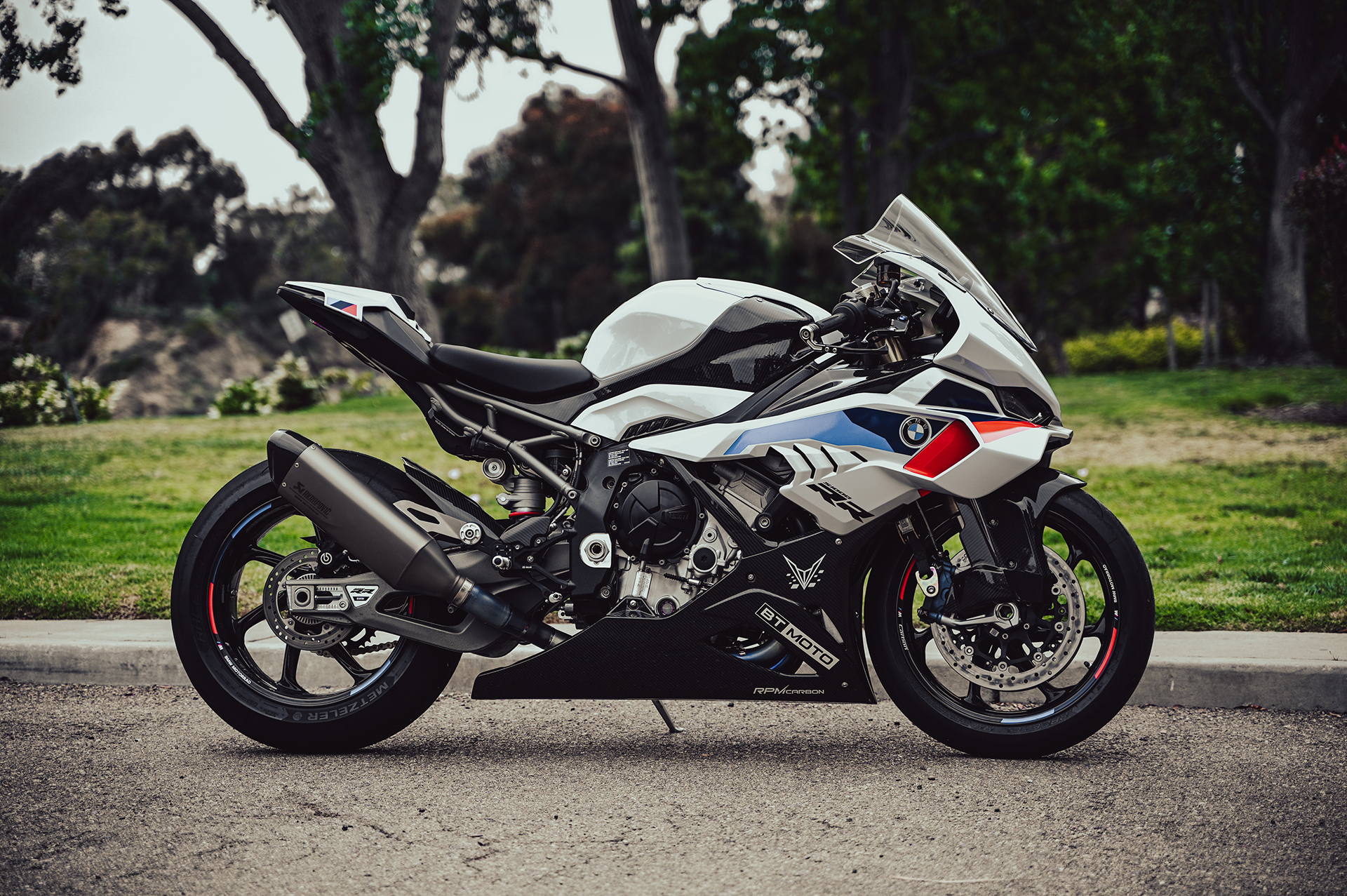
• Inline-fours: Trade low-end torque for high-RPM horsepower. They reward being revved out and tend to feel softer at the bottom of the range, with the real action happening above 7,000 or 8,000 RPM. The Yamaha R1 and BMW S1000RR are textbook examples.
• Triples: Sit between the two, offering reasonable low-end pull with a healthy top-end rush. The MV Agusta and Triumph Street Triple platforms illustrate this character well.
• V-fours: Combine the broad torque of a twin with the high-RPM willingness of an inline-four, which is part of what makes platforms like the Aprilia RSV4 and Ducati Panigale V4 feel so flexible.
The reason these layouts behave differently comes down to firing intervals, intake tract geometry, and how efficiently each cylinder fills at a given RPM. None of these layouts is objectively better; they simply produce power in different ways, and the right choice depends entirely on how the bike will be ridden.
What This Means for Tuning
Understanding the power curve also explains why ECU tuning produces such different results on different platforms. A flash works by addressing the areas where the factory calibration leaves performance unrealized, and those areas vary depending on where the engine's natural strengths sit.
On an inline-four, gains often show up most clearly in the upper rev range, where factory restrictions tend to be most pronounced and where the engine is already trying to make its biggest numbers. On a twin, the meaningful improvements are usually in the mid-range, where the engine spends most of its time and where small fueling and timing changes translate into noticeable seat-of-the-pants difference.
This is also why pairing a calibration with intake and exhaust changes produces such different outcomes from platform to platform. The hardware shifts the volumetric efficiency curve, and the calibration adjusts fueling and ignition to take advantage of the new airflow. The two work as a system rather than independent upgrades.
Reading a Dyno Chart Properly
Once the basics are clear, a dyno chart becomes much easier to interpret. The shape of the curves usually matters more than the peak numbers, especially for street riding.
A few things worth looking at on any chart:
• Where the torque peak sits: A peak at 6,000 RPM feels very different from one at 10,000 RPM, even at identical numbers.
• How broad the torque plateau is: A flat curve that holds peak torque across a wide RPM band feels stronger in real riding than a sharp spike that drops off quickly.
• The shape after the torque peak: A gentle taper preserves more horsepower up top; a steep drop limits how much the bike rewards high-RPM riding.
• The crossover point: Where the torque and horsepower lines meet at 5,252 RPM is a useful reference for orienting the rest of the chart.
Two bikes can produce identical peak horsepower and feel completely different on the road, because what the rider experiences is the full shape of the curve, not the single highest point on it.
Putting It All Together
So yes, torque does decrease as RPM climbs past its peak, and the reason comes down to the physical limits of how fast air can move through an engine. Horsepower keeps climbing because it's a function of both torque and engine speed, which is why peak power always sits higher in the rev range than peak torque.
Engine configuration shapes the whole curve, and the calibration sitting on top of the hardware determines how much of that potential the engine actually delivers. Reading a dyno chart with those relationships in mind makes it much easier to evaluate what a bike will actually feel like on the road, rather than judging it purely on the headline numbers.
For platform-specific calibration recommendations and a closer look at how the curve changes after a flash, get in touch with the BT Moto team. We'll walk through your setup and explain where the gains will actually show up for your bike.
Recent Posts
Related Posts

How to Locate Dyno Tuning Near Me
ByRick Simpson.08 Oct 2026

Difference Mail In vs OBD Flash
ByRick Simpson.08 Oct 2026
.jpg)
2023 BMW M1000RR Review: The Ultimate Riding Experience
ByRick Simpson.08 Oct 2026