


How Motorcycle ECU Flashes Increase Power
Motorcycle ECU flashes are often described in terms of horsepower gains, but the number only tells part of the story. The real question is how those gains are created and where they actually show up in the powerband.
What follows here breaks down how an ECU flash increases power, where the factory calibration holds performance back, and how those changes translate into measurable gains on the road and on the dyno.
Why Factory Tunes Leave Power on the Table
Manufacturers calibrate motorcycles to meet a wide range of requirements that go beyond outright performance. Drive-by noise limits, emissions targets, warranty margins, and worst-case assumptions for fuel quality and altitude all push the factory tune toward the conservative side.
Those constraints show up in a few consistent ways:
• Lean closed-loop fueling at cruise: Used to meet emissions targets, which can trade some throttle smoothness at small openings for compliance.
• Conservative full-throttle fueling: Calibrated to manage exhaust temperatures and durability across conditions, sometimes at the expense of peak output.
• Torque limiters in lower gears: Restrict acceleration during launches and roll-ons, often without the rider realizing it.
• Conservative ignition timing: Set up to operate safely on lower-quality fuel, leaving some performance unused when better fuel is available.
None of these choices are mistakes. They are deliberate trade-offs that allow the same motorcycle to meet regulations, operate reliably across different markets, and hold up over years of varied use.
An ECU flash works by revisiting those trade-offs and adjusting them for a more controlled environment, where fuel quality, maintenance, and usage are known.
What the Flash Actually Changes
A proper ECU flash works across three areas at once. First, fuel mapping is adjusted across the load and RPM range so the engine operates at air-fuel ratios better suited to performance, rather than those primarily shaped by emissions targets.
Second, ignition timing is advanced where fuel quality allows. Factory calibrations leave margin for lower-quality fuel, and a flash can recover some of that headroom when better fuel is consistently used.
The third area is the reduction of factory restrictions that are set conservatively for regulatory or durability reasons. Throttle and torque strategies are made more direct, gear-based limits are reduced, and, on some platforms, top speed limiters are revised or removed.
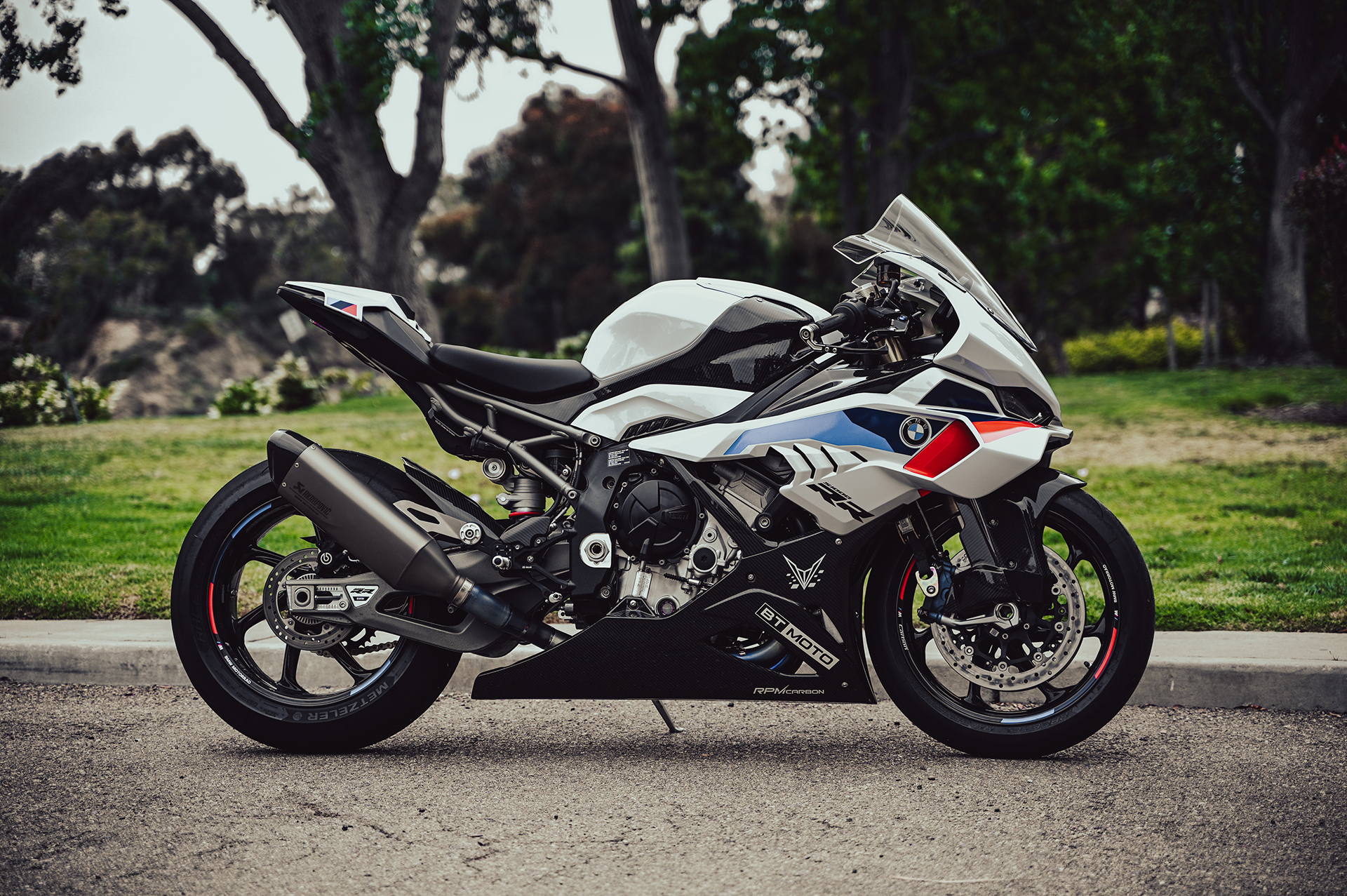
None of this requires new hardware. That is the point of Stage 1 calibrations on bikes like the BMW S1000RR or Yamaha R1. The performance is already in the engine. The flash simply allows it to be used more fully.
Where the Gains Show Up Across the Rev Range
The recovered performance does not appear evenly across the rev range. It shows up in specific areas depending on which factory compromise is being addressed, and that distribution explains why a flashed bike feels different in different riding situations.
At small throttle openings and cruise speeds, the change shows up as improved consistency and smoother response. Closed-loop fueling strategies that prioritize emissions can trade some drivability for compliance, and refining those areas makes steady-throttle riding more predictable even when the dyno shows little difference at that load.
Through the mid-range, the improvement becomes a measurable torque increase as ignition timing advances closer to what the fuel supports. This is where many riders notice the difference first, particularly during roll-ons where factory torque strategies are often more restrictive.
At higher RPM, the calibration allows the engine to operate more effectively under load, making better use of airflow and available timing. Most of the headline horsepower gains tend to appear here, where factory compromises are typically most pronounced.
The Stage 1 Pairing and Why the Numbers Climb
The most noticeable gains tend to appear when a flash is paired with an aftermarket exhaust.
A slip-on or full system reduces restriction on the exhaust side, allowing the engine to move air more efficiently. On a stock ECU, however, fueling and ignition strategies are still based on the original exhaust configuration, so the benefit is only partially realized.
A calibration matched to the new exhaust closes that gap. Fueling is adjusted for the increased airflow, and ignition timing can take advantage of improved cylinder evacuation. With both sides aligned, the hardware and calibration begin to complement each other rather than operate within the limits of the stock assumptions.
That is where combined gains in the 10-20+ wheel horsepower range can come from on higher-output platforms. On bikes like the BMW S1000RR, the effect becomes more pronounced when intake and exhaust changes are paired with a calibration developed for that exact setup.
The relationship works in both directions. An upgraded exhaust on a stock map leaves performance unrealized, while a flashed bike with a stock exhaust will eventually be limited by the airflow the hardware can support.
The Improvements That Don't Show Up as a Single Number
Peak horsepower gets the attention, but the changes a flash brings to how the bike rides often matter more day to day.
Throttle response becomes more direct as ride-by-wire and torque strategies are refined. The connection between the throttle and the rear wheel feels more predictable, especially during transitions on and off throttle.
Other improvements show up across many well-developed calibrations:
• Higher rev limits: On some platforms, the rev ceiling is raised to extend the usable range at the top end.
• Smoother engine braking: Revised deceleration strategies reduce abruptness on corner entry and make transitions more controlled.
• Quickshifter refinement: Adjustments to ignition cut and torque reduction can produce faster, cleaner shifts, particularly under load.
• Improved cold-start behavior: Calibrations may reduce lean popping, stabilize idle, and improve consistency during warm-up.
Individually, these changes may seem small. Together, they reshape how the bike responds in normal riding, which is where most of the time is actually spent.
What a Flash Won't Do
The honest counterweight to the gain numbers is what software cannot change.
An ECU flash can recover performance limited by emissions targets and conservative factory strategies, but it cannot alter the engine’s physical characteristics. It will not improve airflow through the cylinder head, increase compression, or make up for mechanical wear.
If a given platform produces around 180 horsepower at the crank with stock heads, cams, and pistons, no calibration alone will turn it into a 220-horsepower engine. Gains at that level require hardware changes.
What a flash can do, on bikes like the BMW M1000RR, is allow the engine to deliver more of the performance it is already capable of producing. On modern liter bikes, that often means recovering a noticeable amount of wheel horsepower compared to the stock setup.
The result is not a different engine, but a more fully utilized one.
Quick Reference: Where the Gains Land by Setup
The gains make more sense when they’re tied to what’s actually been done to the bike. The ranges below show typical wheel horsepower increases across common setups.
| Setup | Typical Wheel HP Gain | Percentage Gain |
| Flash only, stock exhaust | 3-10 whp | 3-8% |
| Flash + slip-on exhaust | 6-15 whp | 5-10% |
| Flash + full exhaust system | 10-20+ whp | 7-12% |
| Stage 2 with bolt-ons (full intake/exhaust) | 15-25+ whp | 10-15%+ |
| Heavy touring (Goldwing, Rocket 3) | 5-15 whp | 5-10% |
← Swipe left / right to view full table →
What stands out is how the gains scale with airflow changes. A flash on its own produces a noticeable improvement, but the larger numbers come when the calibration is paired with intake and exhaust upgrades.
The reason is straightforward. Hardware changes increase how much air the engine can move, and the calibration adjusts fueling and ignition to match. Without that adjustment, bolt-ons cannot deliver their full potential because the ECU continues operating under factory assumptions.
The flash is what ties the setup together.
Getting the Right Flash for the Bike
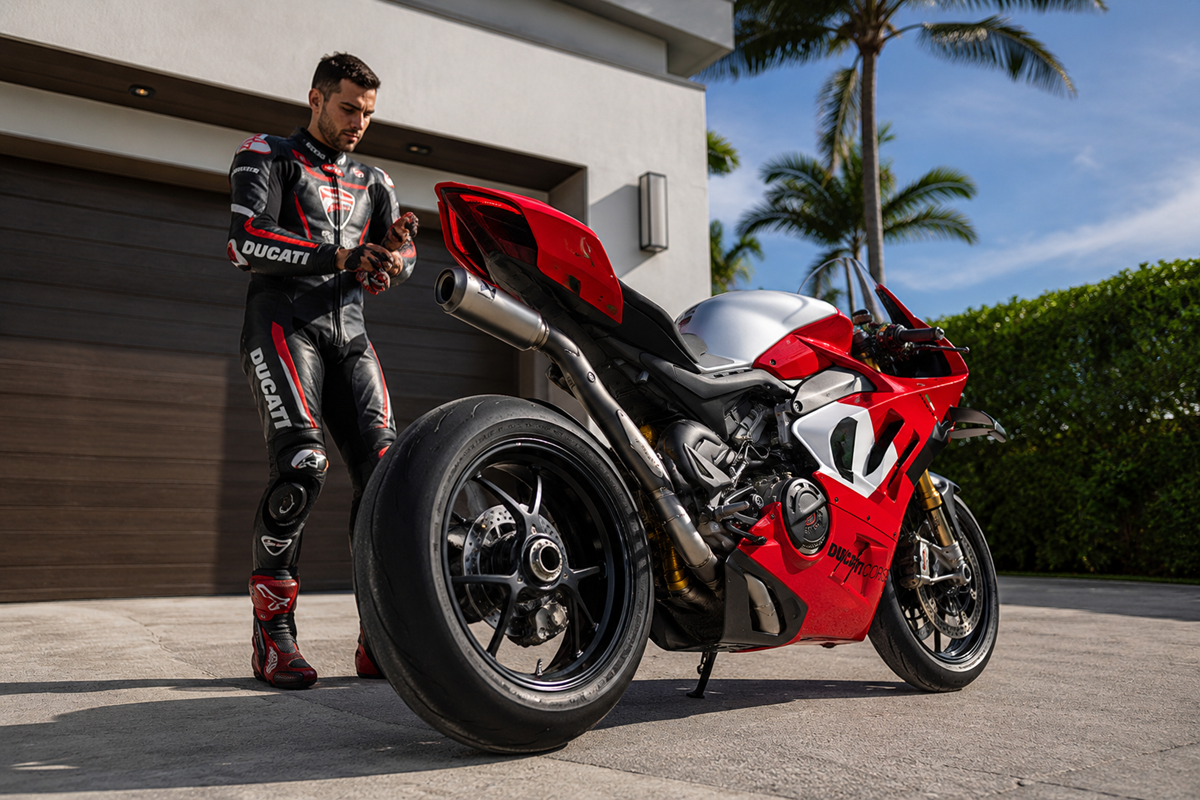
Where the gains show up depends on the platform, model year, fuel quality, and how far the rest of the build has progressed. A daily-ridden touring bike like the Honda Gold Wing responds differently to a flash than a heavily restricted liter bike or a track-focused Ducati Panigale V4 running a full exhaust system.
Matching the calibration to those variables is what determines how much of the available performance is recovered.
For platform-specific recommendations and the right setup for your bike, get in touch with the BT Moto team. We’ll walk through your configuration, fuel, and goals to determine how the gains will show up in real use.
Recent Posts
Related Posts

How to Locate Dyno Tuning Near Me
ByRick Simpson.18 Oct 2026

Difference Mail In vs OBD Flash
ByRick Simpson.18 Oct 2026
.jpg)
2023 BMW M1000RR Review: The Ultimate Riding Experience
ByRick Simpson.18 Oct 2026