


Why Factory Motorcycle Tunes Leave Power on the Table
Every factory motorcycle tune is built around constraints that extend beyond outright performance. Emissions compliance, noise regulations, durability targets, and the need to operate across a wide range of fuel quality and environmental conditions all push the calibration toward conservative margins. The result is an engine that performs consistently everywhere, but not always at its full potential.
When the calibration is revised, the recovered performance tends to show up in specific areas. Ignition timing can be advanced where fuel quality allows, throttle and torque strategies become more direct, and restrictions in lower gears are often reduced. On some platforms, rev limits and engine braking behavior are also adjusted to better suit performance use.
What follows breaks down where those limits come from and how calibration changes translate into measurable performance gains, starting with what factory tunes are designed to do.
What Factory Tunes Are Built For
Every factory ECU calibration carries a long list of competing priorities, many of which extend beyond outright performance. Manufacturers tune fueling, ignition, and throttle mapping for noise drive-by limits, long-term durability, and consistent operation across conditions ranging from desert heat to alpine cold.
The result is a tune that meets regulatory and reliability targets, often with some compromise in peak performance. Fueling is managed to satisfy emissions cycles, ignition timing is kept conservative enough to handle a wide range of fuel quality, and throttle authority is limited in certain conditions to manage torque and component stress.
What factory tunes prioritize, in plain terms:
• Emissions compliance, with closed-loop fueling strategies that can trade some throttle smoothness for regulatory targets.
• Fuel tolerance, with ignition timing set to operate safely on lower-quality fuel, leaving some advance unused under ideal conditions.
• Durability margins, with torque and power limits that keep the engine operating within long-term reliability targets.
• Broad operating range, ensuring consistent performance across altitude, temperature, and environmental variation rather than optimizing for a narrow set of conditions.
This doesn’t mean factory tunes are poorly designed. They’re calibrated to meet a wide range of real-world requirements. It simply means peak performance is only part of the equation, not the primary goal.
Where the Recovered Power Actually Lives
A flash doesn’t create power out of thin air. It recalibrates the system to reduce the regulatory and worst-case buffers that limit how much of the engine’s potential is used. The recovered performance shows up in fueling, ignition timing, throttle strategy, and, on some platforms, rev limits—each contributing differently across the load and RPM range.
Fueling adjustments refine areas where the stock calibration prioritizes emissions and consistency, improving steady-throttle behavior and response off closed throttle. Ignition timing can then advance closer to what the fuel actually supports, recovering torque across much of the load range. Throttle strategies also become more direct, reducing restrictions that limit requested torque, particularly in lower gears.
Most of the measurable gains tend to appear in the upper mid-range and toward the top end, where factory compromises are most pronounced. Lower RPM changes are usually smaller on the dyno but still noticeable in how the bike responds, with smoother transitions and more predictable throttle behavior replacing the inconsistencies built into the stock calibration.
The Dyno Reality: Where the Gains Land
On a properly developed flash, gains typically land in the 3-10% range, depending on the platform, model year, and how conservative the factory calibration is to begin with. On a 200-horsepower liter bike, that translates to roughly 6-20 wheel horsepower, with most of the improvement appearing in the upper mid-range and at peak.
Bikes calibrated to meet stricter emissions and noise standards often carry more conservative factory strategies, which can leave more room for improvement when those constraints are relaxed. The gap between stock and flashed becomes more noticeable when the calibration is paired with airflow modifications, since the factory ECU isn’t designed to fully utilize changes like an aftermarket exhaust or intake.
In those setups, the individual contributions compound. A slip-on paired with a matched flash typically delivers more than either modification alone, because the calibration can finally make effective use of the airflow the hardware provides.
Why a Flash Is Required to Recover the Power
Bolting on hardware without updating the calibration typically leaves a portion of the potential gain unrealized. The factory ECU continues to operate using the same fuel and ignition strategies it was calibrated for, which means changes to the intake, exhaust, or filtration aren’t fully translated into additional performance. In many cases, closed-loop control maintains target air-fuel ratios rather than allowing the engine to take advantage of the increased airflow.
To recover more of that potential, the calibration needs to be revised. A proper flash adjusts fueling and ignition timing to align with the new airflow characteristics, refines throttle and torque strategies, and, on some platforms, revises limits that are set conservatively for emissions, durability, or regulatory reasons.
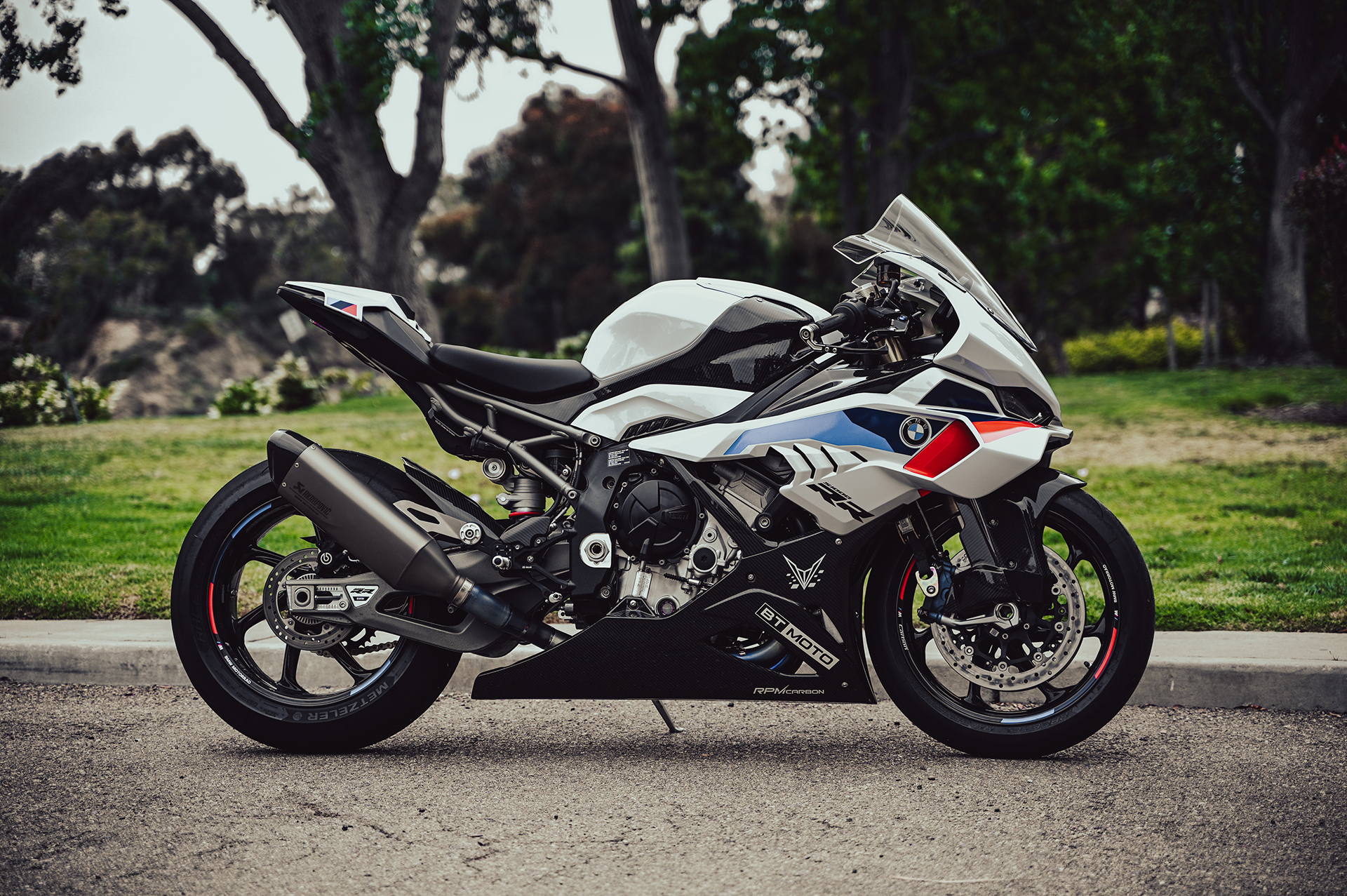
On modern bikes like the BMW S1000RR, this often includes recalibrating how rider input translates into torque delivery, allowing the engine to make more effective use of its mechanical capacity. For setups that combine intake and exhaust modifications, matched calibration packages—such as Stage 2 configurations developed alongside the hardware—help ensure the individual changes work together rather than being limited by the stock strategy.
Where Factory Tunes Still Make Sense
Flashing isn’t the right choice for every rider. A bike that needs to remain fully aligned with dealer service requirements, operates under an active warranty, or is expected to stay within OEM specifications has solid reasons to retain the factory calibration.
The stock tune also preserves emissions compliance, which can matter in regions with strict enforcement. Just as importantly, it maintains consistent behavior across a wide range of fuel quality, altitude, and environmental conditions—factors that often matter more in daily use than peak power.
For riders commuting on a stock bike and not chasing performance gains, the factory setup is a reasonable place to stay. It delivers quieter operation, full warranty coverage, and predictable day-to-day behavior, without introducing variables the rider isn’t trying to manage.
Platform-Specific Differences Worth Knowing
The size of the gain from a flash varies meaningfully across platforms. Bikes with more conservative factory calibrations tend to show larger improvements, while platforms that are already tuned more aggressively from the factory see smaller gains in absolute terms.
A few platform-specific patterns that influence the outcome:
• BMW S1000RR Stage 1 - Gains tend to concentrate in the upper mid-range and near peak, where factory restrictions are most pronounced. Revised calibration also improves how torque is delivered through the gears.
• Aprilia RSV4 calibrations - The V4 architecture responds well across the rev range, with consistent gains supported by improved fueling and more direct throttle strategies.
• Honda Goldwing Stage 1 - Tuning follows the same core principles, though the focus shifts toward smoothing delivery and reducing conservative buffers built in for long-distance reliability and varying fuel conditions.
Quick Reference: Factory Tune vs. Flashed Tune
Pulling the comparison into a single view makes the trade-offs easier to weigh against how the bike is actually used.
| Factory Tune | Flashed Tune |
| Built for emissions compliance and worst-case conditions | Calibrated for typical real-world or performance-oriented use |
| Conservative fueling and ignition timing across the load range | ~3-10% power gain on most platforms |
| Closed-loop cruise fueling prioritizes emissions over response | Smoother throttle response, especially off closed throttle |
| Torque and throttle limits active in certain conditions and gears | Reduced restrictions and more direct torque delivery |
| Maintains full warranty alignment and dealer serviceability | Requires awareness of dealer updates and service interactions |
| Best for stock bikes and daily use under warranty | Best for modified bikes, track use, and performance-focused builds |
← Swipe left / right to view full table →
What stands out across these rows is how much the choice depends on context rather than absolute superiority. Factory tunes are conservative by design and excel at meeting regulatory and reliability targets. Flashed tunes deliver measurable performance and rideability improvements when matched to the hardware, with the trade-off of requiring the rider to manage updates and dealer interactions more carefully.
Getting the Right Calibration for the Bike
The decision between staying on the factory tune or moving to a flashed calibration comes down to how the bike is used and how far the build has progressed. Factory calibrations leave performance on the table by design, but that trade-off only matters when the rider is trying to access it.
A daily commuter in stock form is generally well-served by the factory setup, where consistency, compliance, and warranty alignment matter more than peak output. A modified bike running a slip-on, upgraded filtration, or a full intake and exhaust package, on the other hand, leaves measurable performance untapped without a calibration matched to the hardware.
For platform-specific recommendations, get in touch with the BT Moto team to walk through how much performance can realistically be recovered based on the bike’s configuration and intended use.
Recent Posts
Related Posts

How to Locate Dyno Tuning Near Me
ByRick Simpson.18 Oct 2026

Difference Mail In vs OBD Flash
ByRick Simpson.18 Oct 2026
.jpg)
2023 BMW M1000RR Review: The Ultimate Riding Experience
ByRick Simpson.18 Oct 2026