


How Much HP Does an ECU Flash Add to a Motorcycle?
The first question most riders ask before investing in an ECU flash is the simplest and the hardest to answer cleanly: how much horsepower am I actually going to gain? The honest reply depends on the bike, the modification state, the fuel being run, and the quality of the calibration itself.
What's possible on one platform is wildly different from what's possible on another, and the numbers that get thrown around on forums often mix together peak gains with mid-range gains, optimistic claims with verified dyno results.
The general rule sits in a fairly predictable range. An ECU flash typically adds 3 to 10 horsepower (roughly 5 to 10 percent) to most motorcycles, though high-performance liter bikes can gain up to 20+ HP when combined with exhaust upgrades.
The more important story, and the one that gets lost in the peak-number conversation, is what a flash does to the entire powerband, throttle response, engine braking, and the feel of the bike across every RPM the rider actually uses.
Why Stock Bikes Leave Power on the Table
Every motorcycle sold at a dealership has been calibrated to meet a long list of requirements that have nothing to do with how the bike performs.
Emissions regulations dictate specific lambda targets at cruise, noise standards push intake and exhaust tuning into conservative territory, and warranty considerations force manufacturers to build in safety margins that most engines will never need. On top of that, market-specific restrictions often limit throttle angle, cap top speed, or hold the engine back in certain gears to meet local road rules.
The result is a factory tune that works against the rider in several specific ways:
• Lean closed-loop cruise fueling to satisfy emissions testing, which produces surging and poor throttle transitions at small openings.
• Artificially rich full-throttle mapping that keeps exhaust gas temperatures low regardless of fuel quality, at the cost of peak power.
• Torque limiters in lower gears that reduce acceleration off the line and during roll-on, often without the rider knowing they're there.
• Throttle angle restrictions that prevent the butterflies from opening fully even when the rider has the grip pinned, holding back the engine's actual capability.
• Conservative ignition timing that assumes the worst-case fuel, which leaves measurable power on the table for riders running quality pump gas or race fuel.
A proper flash removes the restrictions that have nothing to do with engine protection, optimizes fueling across the entire map, adjusts ignition timing to match the fuel being run, and opens up throttle angles that were artificially limited. None of that requires new parts. It's pure software work on hardware that's already bolted to the frame.
What the Dyno Actually Shows Across Different Platforms
Real dyno numbers from properly documented flashes show a clear pattern across bike categories. Middleweight sportbikes like the Kawasaki ZX-6R see gains in the range of 9 to 10 horsepower at the rear wheel, representing around 8 to 9 percent over baseline, with matching torque increases in the upper mid-range.
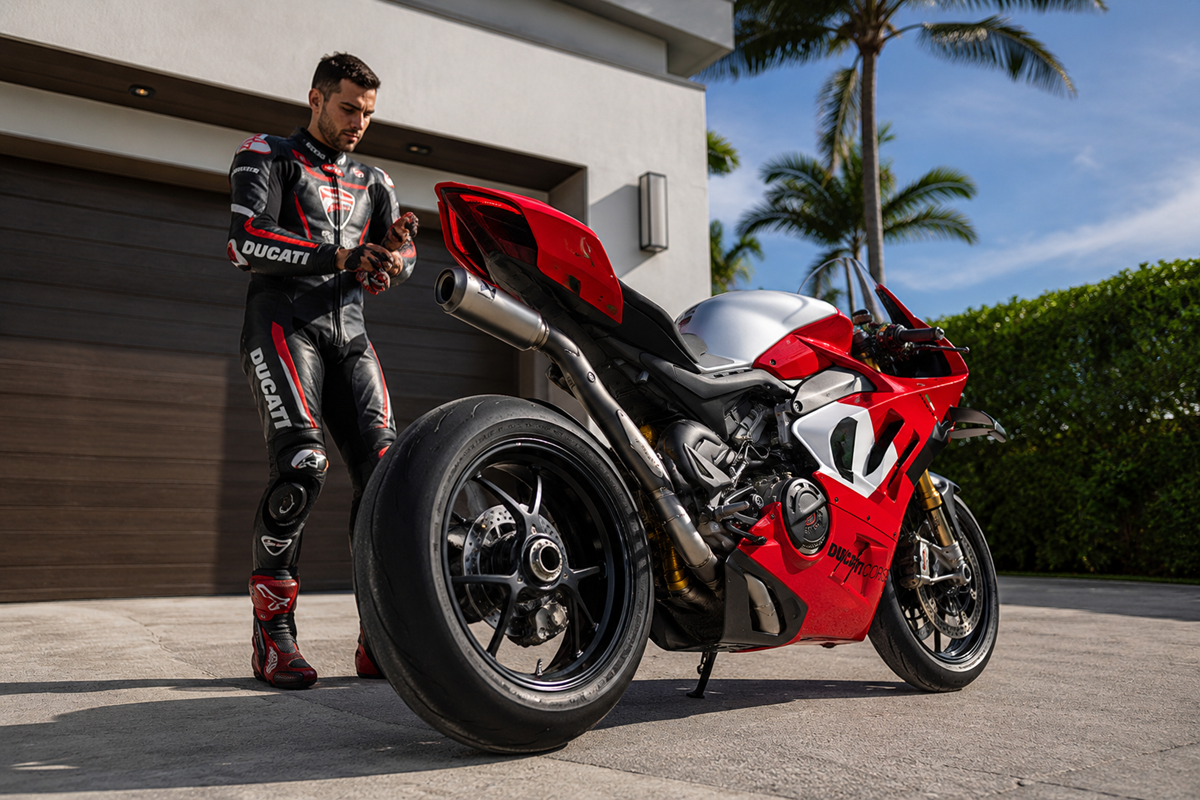
A Ducati Streetfighter V4 running a flash alone moved from 182 to 189 horsepower at the rear wheel, then jumped to 195 horsepower with a slip-on exhaust and a second flash to match.
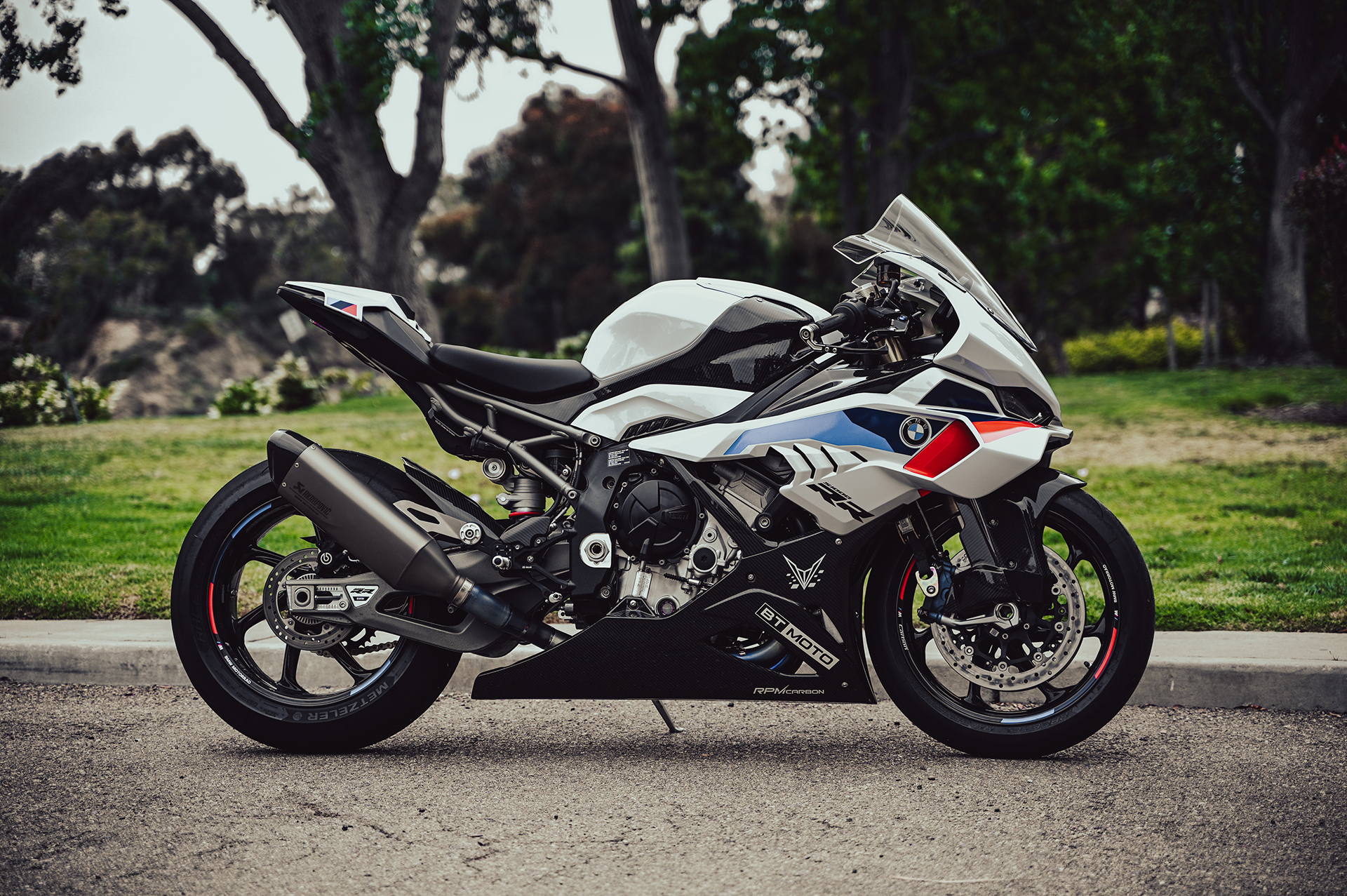
Liter bikes with heavily restricted factory calibrations show the biggest gains. A 2023 BMW S1000RR moved from 175 to 190 wheel horsepower on 91 pump gas, with over 60 wheel horsepower of mid-range gain in second gear once the factory torque limiters and throttle restrictions were removed.
The 2025 S1000RR jumped from 191 to 211 wheel horsepower with up to 24 additional horsepower across key parts of the rev range and 10 lb-ft more torque in the midrange once the full Stage 2 calibration and bolt-on package was applied.
Adventure and sport-tourers tell a similar story. A 2022 BMW S1000XR picked up 11 wheel horsepower with consistent gains across the RPM range, without sacrificing any low-end power.
A 2023 BMW F 750 GS returned the most dramatic result on the platform: a 25 wheel horsepower gain at peak RPM and a consistent 20 wheel horsepower gain across the entire RPM range, with torque climbing from 39 to 53 lb-ft at the wheel, because the stock calibration was operating at only about 40 percent throttle and a flash unlocked the full throttle authority.
Peak Gain Ranges by Bike Category
Bike Category | Flash Only (Stock Hardware) | Flash + Bolt-Ons | Percentage Gain |
Middleweight Sport (600-750cc) | 5-10 wheel HP | 10-15 wheel HP | 7-12% |
Liter Bikes (1000cc Sport) | 8-15 wheel HP | 15-25 wheel HP | 5-12% |
Adventure / Sport-Touring | 8-25 wheel HP | 15-30 wheel HP | 10-25% |
Naked / Streetfighter | 6-12 wheel HP | 12-20 wheel HP | 5-10% |
Heavy Cruiser / Touring | 5-10 wheel HP | 10-15 wheel HP | 8-12% |
← Swipe left / right to view full table →
Why Peak Horsepower Misses the Real Story
The dyno chart everyone wants to see is the one with the bigger peak number. The chart worth paying attention to is the one showing the area under the curve. Peak horsepower happens at one specific RPM, often within a few hundred RPM of redline, and for most street riding that's territory the engine barely visits. The place where a flash transforms the bike is the mid-range, which is where throttle inputs actually translate into acceleration during normal riding.
Factory calibrations almost always carry a mid-range dip, sometimes called a flat spot or dead zone, where the ECU is either holding fueling back for emissions compliance or reducing torque to meet a drive-by-noise test requirement.
On many liter bikes this falls between 4,000 and 7,000 RPM, which is exactly where highway passes, corner exits, and roll-on acceleration happen. Filling in that dip with a proper flash produces a bike that feels substantially faster in real riding even when the peak number has only moved by a few horsepower.
The Gains That Don't Show Up on the Dyno Chart
A well-developed flash changes the bike in ways that horsepower alone cannot capture. The ride-by-wire throttle mapping on most modern bikes is calibrated conservatively to smooth out inputs for less experienced riders and to reduce emissions spikes under transient throttle.
A reworked throttle map produces crisper tip-in, faster response off a closed throttle, and a direct connection between the right wrist and the rear wheel that feels unfiltered rather than processed.
The specific improvements that matter most to daily rideability include:
• Smoother engine braking through revised deceleration fueling, which reduces the harsh drag effect through the drivetrain and makes corner entry cleaner without the rear wheel chattering or hopping.
• Higher rev limits, usually raised by 300 to 700 RPM above the conservative factory ceiling, giving the rider access to top-end the engine was already mechanically capable of producing.
• Softer fuel-cut transitions at the limiter, so hitting redline feels progressive rather than like slamming into a wall.
• Quickshifter refinement, with faster and cleaner upshifts and downshifts thanks to revised ignition cut timing and kill durations.
• Eliminated cold-start issues, including lean popping, high idle that won't settle, and stalling in the first few minutes after startup.
• Fan temperature corrections that keep the bike cooler in traffic and reduce heat soak on the rider's legs during slow riding.
• Expanded closed-loop operation, which on BT Moto calibrations means the bike self-tunes at every throttle position using the factory sensors, without needing to return to a dyno when conditions or modifications change.
None of these show up as a single number on a dyno sheet, and all of them change how the bike feels every time the rider throws a leg over it.
What Actually Determines Your Gain
Three factors explain most of the variation between what one rider sees and what another sees on the same model bike. The first is the factory restriction level on that specific platform. Bikes sold into markets with strict emissions and noise rules (California, Europe, Japan) typically carry heavier restrictions than the same bike sold elsewhere, and a flash will recover more on the restricted version.
The second is fuel octane. A calibration built for 91 octane will produce less power than the same map recalibrated for 93 or race fuel, because ignition advance can be pushed further before knock becomes a limiting factor.
The third is the quality of the supporting modifications. A slip-on exhaust, a derestricted intake, or an unrestricted airbox all increase airflow, and a flash that accounts for that increased airflow unlocks meaningfully more power than a flash on a completely stock bike.
There's also the matter of tuning methodology. A generic map flashed onto thousands of bikes will produce a baseline improvement. A dyno-developed calibration tuned for a specific configuration, using datalogging and closed-loop feedback to refine the map over multiple sessions, produces results that are both larger in absolute terms and safer across varied conditions. The difference is often 5 to 10 percent on the dyno and considerably more in terms of rideability.
What a Flash Won't Do
Managing expectations matters as much as quoting the best-case numbers. A flash cannot overcome mechanical limits. If an engine is producing 180 horsepower at the crank through stock heads, cams, and pistons, no amount of software work will turn it into a 220 horsepower engine. The software can recover what emissions and safety margins have taken away. It cannot rewrite the airflow characteristics of the top end.
The boundaries of what a flash can and cannot deliver break down into a few concrete limitations:
• It won't fix mechanical problems. A leaking intake boot, clogged fuel filter, worn throttle body, or failing sensor produces symptoms that feel like a tuning issue but require hardware attention. Tuning on top of a fault masks the problem and lets it get worse.
• It won't replace airflow modifications on a restrictive platform. If the airbox or exhaust is the limiting factor, a flash alone cannot fully unlock the engine, which is why the largest gains come from a flash paired with matched bolt-ons.
• It won't produce peak numbers in real-world conditions. The figures quoted on product pages come from calibrated dynos in controlled temperatures with specific fuel. Hot weather, lower-grade fuel, and altitude will reduce the number seen in daily riding.
• It won't legalize a race calibration for street use. Many Stage 2 and race-focused maps are sold for closed-course use only, and running them on the road creates emissions and regulatory exposure the rider needs to understand going in.
• It won't compensate for abused or neglected engines. A tune will not restore compression, repair worn rings, or fix burnt valves. The engine needs to be mechanically healthy before calibration can do its job.
Pulling fault codes, confirming mechanical health, and baselining the stock dyno numbers before flashing is the standard approach for getting a clean result.
Getting the Most From a Flash
The riders who see the largest and most consistent gains follow a clear pattern. They start with a mechanically sound bike, pull fault codes before flashing, and baseline their stock dyno numbers when possible.
They match the calibration to the hardware state, either by running the generic stage that matches their mod list or by requesting a custom map if they're running an unusual combination. They use the fuel the map was designed for, and they respect the break-in period for any new parts before pushing the bike to its new limits.
A handheld tuner makes the process considerably more flexible, because the rider can store multiple maps, revert to stock for service visits, and receive updated calibrations as the bike's modification state evolves.
Explore the full range of BT Moto handheld tuners to find the right device for your platform, or browse our ECU tuning options to see the complete performance calibrations developed for specific models.
Recent Posts
Related Posts

How to Locate Dyno Tuning Near Me
ByRick Simpson.20 Oct 2026

Difference Mail In vs OBD Flash
ByRick Simpson.20 Oct 2026
.jpg)
2023 BMW M1000RR Review: The Ultimate Riding Experience
ByRick Simpson.20 Oct 2026